Most spider webs around a Las Vegas or Henderson home come off in minutes with a vacuum, a broom, or a garden hose. The part people skip is checking what built the web first. Two local spiders, the black widow and the desert recluse, can bite when a hand gets too close. To get rid of spider webs for good, you also have to deal with whatever keeps rebuilding them.
How do you remove spider webs safely?
Vacuum spider webs indoors, and sweep or hose them off outdoors. Wear gloves anywhere a black widow could be hiding. University of California IPM recommends exactly this approach and says pesticides are not generally needed for spiders.
Pick the tool based on where the web is:
| Where the web is | Best tool | Why | Watch for |
|---|---|---|---|
| Ceiling corners, windows, behind furniture | Vacuum with a hose attachment | Spiders’ soft bodies usually don’t survive the trip through the hose | Empty the canister or bag outdoors |
| Eaves, patio covers, exterior walls | Broom or high-pressure hose | UC IPM’s recommended method for the outside of a house | A spider can drop from an eave retreat |
| Block walls and foundation gaps | Long-handled broom, gloves | Keeps your hand away from the retreat hole | Black widows hide in gaps between blocks by day |
| Garage doors, vents, shelves | Vacuum or broom, gloves | Garages are a favorite black widow site | Never reach behind boxes bare-handed |
| Patio furniture, toys, trash cans | Broom or hose, then inspect | Widows build under lips and ledges | Check undersides, not just tops |
Three rules apply everywhere:
- Wear gloves. UC IPM gives this advice for any cleanup of clutter or storage areas, specifically to prevent accidental bites.
- Use a tool, not your hand. A spider disturbed in its web may bite by instinct because it senses an insect has been caught.
- Look before you sweep. Shine a flashlight into dark corners and gaps first.
How to tell if a spider web is active or abandoned
A spider web covered in dust is abandoned. UC IPM notes that spiders keep occupied webs clean because a clean web catches more prey. A dusty, sagging cobweb is just debris. A clean web with tight, fresh strands probably has its builder nearby.
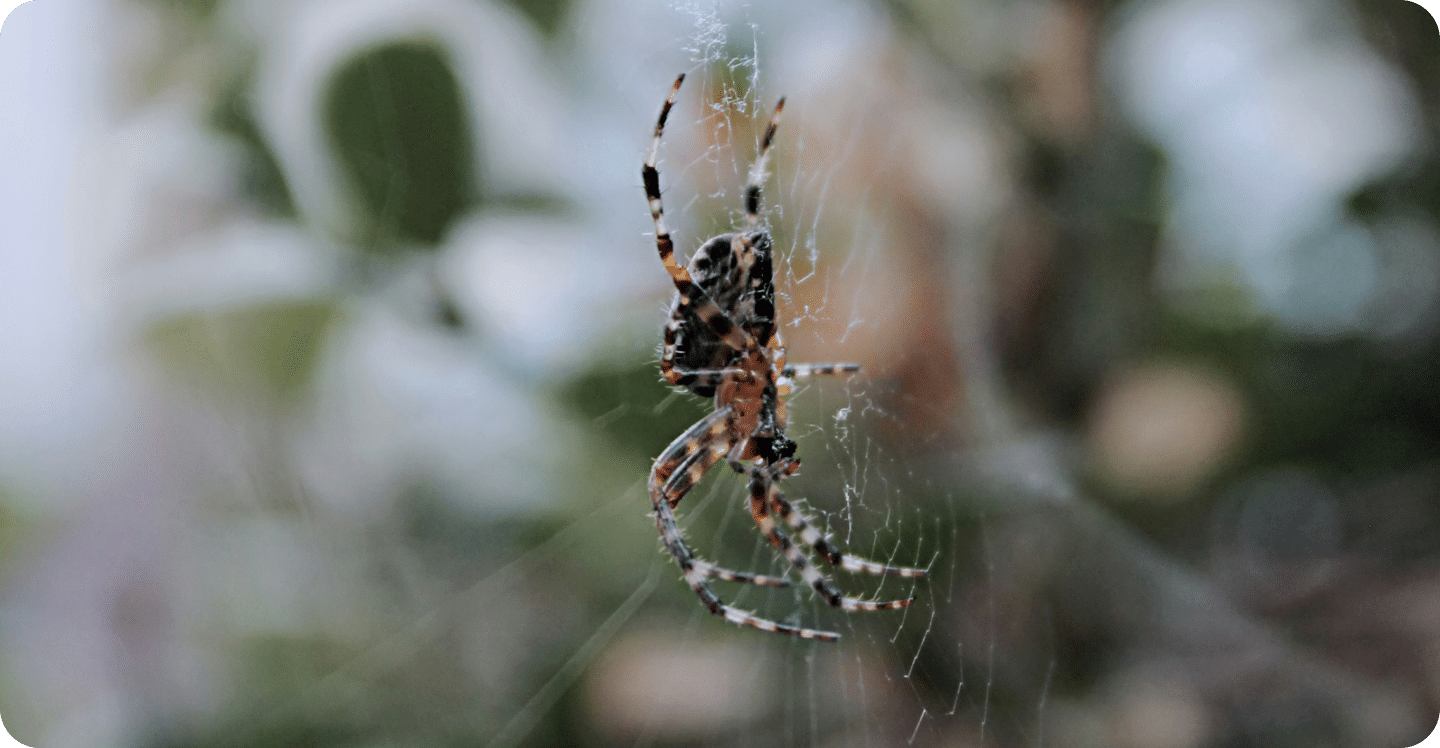
The shape of the web tells you who built it. These are the web-builders Las Vegas homeowners usually deal with:
| What the web looks like | Likely builder | Where it shows up | Concern |
|---|---|---|---|
| Messy, irregular, tough, sticky strands, usually low to the ground | Western black widow | Block walls, garage doors, vents, patio furniture | Yes. Glove up |
| Loose, tangled cobweb up high | Cellar spider (long, thin legs) | High corners of rooms and garages | Very low. A nuisance, mostly for the mess |
| Small silken sac | Yellow sac spider | Wall and ceiling corners, behind shelves and pictures | Low |
| Sparse silk around a hidden retreat | Desert recluse (“desert brown”) | Stored boxes and clothing in the garage | Yes. Glove up |
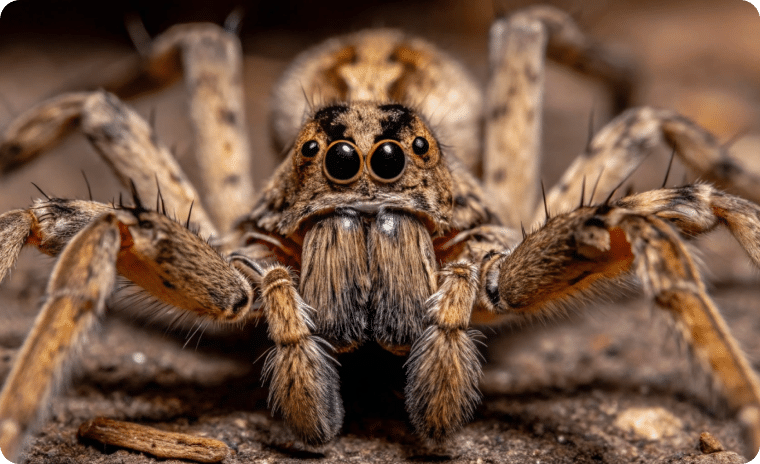
Wolf spiders, jumping spiders, and tarantulas don’t spin webs to catch prey, so they are rarely the source of cobwebs. For photos and a full identification guide, see our article on Las Vegas spiders and which ones are dangerous.
Timing matters with black widows. UC IPM says widows spend the day hidden in a retreat and come out at dusk to sit in the web. A daytime sweep takes the web but can leave the spider in its hole. Sweep during the day, then recheck the same spots at dusk with a flashlight.
[TECHNICIAN INPUT: one line on where Swat It! crews find the most webs on Las Vegas and Henderson homes, such as block walls, garage door tracks, or eaves.]How to get rid of spider webs inside the house
Indoors, a vacuum removes the web and usually the spider in the same pass. UC IPM recommends regular vacuuming or sweeping of windows, room corners, storage areas, and other rooms you rarely use.
- Start high and work down. Clear ceiling corners first, where cellar spiders hang their loose cobwebs. Then do window frames and finish at the baseboards so falling debris gets picked up.
- Check behind wall hangings and shelves. Yellow sac spiders spin their small silk sacs there.
- Vacuum the spider along with the web. Leaving the spider means a new web in the same corner.
- Empty the vacuum outside. Seal the bag or dump the canister into an outdoor trash can.
- Relocate a single spider if you prefer. Place a jar over it, slide a piece of paper underneath, and release it outdoors.
Webs indoors are usually a sign of insects indoors. UC IPM notes that the more insects a building has, the more likely it is to have spiders.
How to clean spider webs outside your house
Outside, use a broom or a high-pressure hose. Both are UC IPM’s recommended ways to clear webs from the exterior of a house. Work from the roofline down so debris doesn’t land on areas you already cleaned.
- Eaves and patio covers. UC IPM notes that some black widows hide in a retreat high in an eave, then drop 10 feet or more before building their web. Clear eaves with a long-handled broom or the hose, not a stepladder and your hand.
- Block walls. Block walls are prime black widow territory in the valley, according to Clark County Vector Control. Their webs there look like tangled clumps, not tidy spirals. Sweep across the face of the wall, and keep fingers out of the gaps.
- Patio furniture, toys, and pots. Widows like any outdoor object with a sheltered lip or hollow underside. Tip chairs, pots, and plastic play equipment over and sweep the undersides.
- Light fixtures. Outdoor lights attract insects, and insects attract spiders. Clear webs around porch and garage lights every time you clean.
- The foundation line. Clear trash, leaf litter, and heavy vegetation away from the walls. Webs built in that clutter come back fastest.
How to keep cobwebs out of the garage
Treat garage web removal as bite prevention. In garages, UC IPM says black widow webs cluster around doors and vents, where insects wander in. The desert recluse is the other concern: Clark County Vector Control has pointed to clothing stored in the garage as a common place to run into one.
- Put on gloves before you touch anything.
- Clear webs along the garage door, side door, and vents with a vacuum or broom.
- Pull boxes away from walls slowly and check behind them with a flashlight.
- Shake out stored clothes, gloves, and shoes before wearing them. UC IPM recommends keeping them in tightly closed plastic bags or bins.
- Set sticky traps along the base of the walls, out of reach of pets and kids. UC IPM notes they catch spiders without insecticide and show you how many are around.
For the full list of storage and sealing steps, see our guide to Las Vegas spiders.
What to do with spider egg sacs
Remove egg sacs at the same time as the webs, or the spot refills. A western black widow egg sac is yellowish and teardrop-shaped, narrow at the top and rounded at the bottom, with well-defined edges. UC IPM notes the covering is very tough and hard to rip apart, unlike the fluffy, cotton-ball sacs some spiders make. Each one holds hundreds of eggs.
Vacuum egg sacs, or pull them off with a gloved hand and seal them in a bag before throwing them out.
Don’t count on a spray to handle them. UC IPM notes that most insecticides sold for spiders are water-based, while egg sac silk repels water, so the spray may never reach the eggs. Physical removal is the dependable option.
Why do cobwebs come back after cleaning?
Cobwebs come back because the spider is still there or new spiders keep arriving. Chris Bramley, then a Clark County Vector Control supervisor, put it simply: “Clear out the webs, and if they come back, you have a spider.”
Four things usually explain it:
- The spider survived. Daytime sweeping misses black widows hiding in their retreats.
- There is food. Lights and indoor insects keep drawing spiders to the same spots.
- New spiders land on your property. Young black widows travel on silk threads carried by the wind, sometimes a few feet and sometimes miles. UC IPM says this means removal has to be repeated throughout the year.
- There is still cover. Clutter, woodpiles, and debris along the foundation give spiders places to rebuild.
UC IPM is blunt about widows: it is not practical to eliminate them completely, and they will keep re-infesting treated areas. Spraying alone is temporary unless it comes with this kind of housekeeping.
When to call a professional
Web removal is routine maintenance. It becomes a pest problem when the same webs return within days, when widows keep turning up in the same wall or garage corner, when you suspect a desert recluse, or when webs keep showing up around play equipment and patio furniture.
If you are tempted to reach for a can of spray, Clark County Vector Control’s advice is not to: some people react badly to pesticides, and most homeowners are better off calling a professional. We compare the two approaches in DIY pest control vs professional.
Licensed applicators can treat the cracks, crevices, and wall voids where spiders retreat. UC IPM notes some of the dusts used for this are available to professionals only. [SWAT IT! TO CONFIRM: what a spider visit includes, such as web removal, eave and block wall treatment, and follow-up.] Details are on our spider control and extermination page, and we cover homes across the valley, including Las Vegas pest control and Henderson pest control.
Frequently asked questions
Is it bad to knock down spider webs?
No, but you don’t have to clear every one. Most spiders are beneficial because they eat pest insects, according to Clark County Vector Control and UC IPM. Remove webs near doors, play areas, and anywhere a black widow might be, and consider leaving webs in the far corners of the yard alone.
Does bug spray stop spiders from rebuilding webs?
Not for long. According to UC IPM, spraying spiders outdoors gives only temporary results unless you also clear webs and hiding spots. UC IPM adds that crushing or vacuuming a spider is just as easy and much less toxic.
Does diatomaceous earth help with spiders?
Clark County Vector Control has suggested diatomaceous earth as a homeowner option. It works as a desiccant, drying out spiders that crawl through it, and is dusted along walls. Vector Control says it works on scorpions too. It does nothing to webs that are already up.
Can I hose spider webs off my house?
Yes. UC IPM recommends a broom or a high-pressure garden hose for clearing webs from the outside of a house. Check low webs on block walls and around the foundation for black widows before you start, and work in daylight so you can see what you are spraying.
Are spider webs dangerous to touch?
The silk itself isn’t. The risk is the spider. A spider disturbed in its web may bite by instinct because it senses caught prey. In Las Vegas, the black widow and desert recluse are the two spiders of medical concern, so use a tool and gloves rather than bare hands.
What should I do if I get bitten while cleaning webs?
Get medical advice right away: Poison Control is free at 1-800-222-1222, or go to urgent care. Bring the spider in a sealed jar if you can catch it without risk, since knowing the species helps the person treating you.
How often should I remove spider webs?
There is no set schedule. UC IPM recommends regular sweeping and vacuuming as part of normal cleaning. Because new spiderlings drift in on the wind all year, expect to repeat it throughout the year, and recheck any spot where a web comes back.
Why are there so many spider webs in my house?
Usually because insects are getting in. UC IPM notes that the more insects a building has, the more likely it is to have spiders. Sealing cracks in the foundation and gaps around windows and doors, and keeping window and door screens in good repair, keeps out both spiders and the insects they eat.
What to do next
- Vacuum ceiling corners, windows, and wall hangings indoors, working top to bottom.
- Sweep or hose webs off eaves, block walls, and patio covers during the day, wearing gloves.
- Go back out after sunset with a flashlight and look at the spots you cleaned. Any widow you missed will be sitting in a fresh web.
- Vacuum or bag any egg sacs rather than spraying them.
- Bag or bin the gardening gloves and clothes you keep in the garage, and shake them out before use.
- Aim outdoor lights away from doors and windows so they draw fewer insects.
- If the same webs are back within days, request a spider inspection.