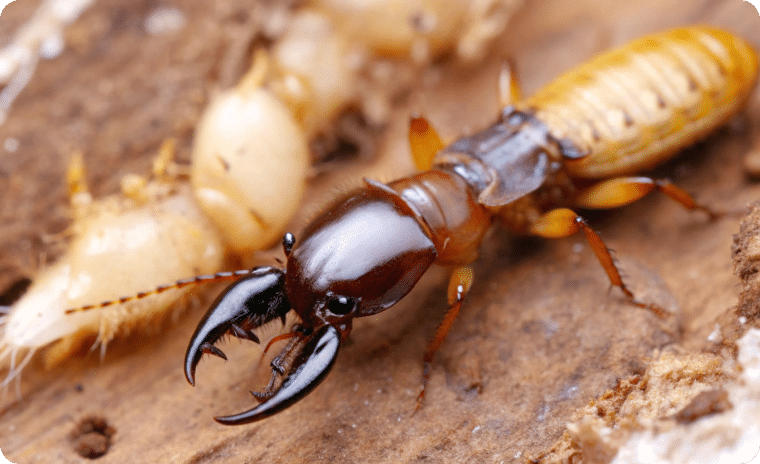
Yes, there are termites in Las Vegas, and they can damage homes here. The desert is not too dry for them. It is also not true that every house in the valley is infested.
Here is how termites survive in Southern Nevada, the warning signs, what a termite inspection checks when you buy a home, and how treatment works.
Are there termites in Las Vegas?
Yes. Termites live in the Las Vegas Valley and can damage homes, but the risk is lower and more uneven than in humid states. Termites need moisture, so the homes most at risk are ones where water, wood, and soil meet: leaking plumbing, damp soil against the foundation, or wood touching the ground.
One of the most-read discussions on this topic asks whether all of Las Vegas real estate is infested with termites. It is not.
The best local context we found is dated, so read it as history. In a 1997 Las Vegas Sun article, a UNLV entomologist said termites were “not terribly common around here,” noting that most Southern Nevada homes sit on concrete slabs. In the same article, the Nevada Cooperative Extension Service said some houses 30 years or older did have termite problems. The article also cites a 1931 federal survey that found termites feeding on dead cottonwood stumps in the Las Vegas Wash. Termites were here before the houses were.
We could not find a recent public survey of termite activity in Las Vegas homes. [REVIEWER: add what Swat It! technicians see in the field, if you can share it.] The answer for your house depends on the conditions around it, which is what an inspection checks.
Which kinds of termites damage homes in the desert?
Two groups matter for homes: subterranean termites, which live in the soil and need steady moisture, and drywood termites, which live inside dry wood above ground. A third group, dampwood termites, needs very moist, decaying wood and is mostly a coastal problem. Knowing which one you have matters, because they are treated differently.
| Subterranean termites | Drywood termites | |
|---|---|---|
| Where the colony lives | In the soil, sometimes several feet below the surface | Inside the wood it is eating, above ground, with no soil connection |
| Moisture needs | High. Must stay connected to soil or another water source | Low. Can survive in very dry wood, including dead wood in deserts |
| How they reach the house | Mud (shelter) tubes over foundations, cracks and voids in concrete, wood touching soil | Winged swarmers land on exposed wood and move in |
| Most common sign | Mud tubes | Small pellets with six flat sides piling up under infested wood |
| Damage pattern | Galleries run along the wood grain, lined with soil and grayish-brown specks | Chambers and tunnels that can cut across the grain |
| Treatment approach | Soil-applied termiticide barrier or bait stations | Spot injection, heat, wood replacement, or whole-structure fumigation |
UC IPM reports that California’s drywood termites are most prevalent in Southern California, including its desert areas. Which types Las Vegas inspectors find most often is a local question. [REVIEWER: add which termite types Swat It! technicians find most often in the valley.] Subterranean colonies can be large: UC IPM reports that a 2,400-square-foot home could have several colonies with hundreds of thousands of foragers around it.
Why do termites survive in a dry desert city?
Subterranean termites survive in Las Vegas because houses create the moisture the desert lacks. Watered landscaping, leaking pipes, roof runoff, and poor drainage keep soil damp beside foundations. University of California entomologists note that the conditions termites forage best in, warm temperatures and high soil moisture, are usually present under and around buildings.
The USDA’s subterranean termite bulletin (revised 1989; the biology has not changed) lists the conditions that invite termites:
- Damp wood near water. Wood around sinks, toilets, and leaking pipes, or wood kept wet by runoff from a roof or gutter.
- Wood touching soil. Untreated fence posts, planter boxes, porch steps, stacked lumber, and scrap wood buried during construction.
- Cracks in concrete. Termites enter through small cracks, voids, and expansion joints in slabs and foundation walls to reach wood that never touches the soil.
- Too little clearance. UC IPM recommends keeping structural wood at least 12 inches above the soil.
- Stucco to the ground. UC IPM notes that stucco running down to the soil can let termites travel between the stucco and the foundation where you cannot see them.
A concrete slab slows termites down. It does not stop them, and the bulletin describes slab-on-ground construction as one of the harder situations to treat.
What are the signs of termites in a Las Vegas home?
The most common sign is mud tubes, thin tunnels of soil running up a foundation or wall. Other signs are winged insects swarming indoors, piles of shed wings near doors and windows, wood that sounds hollow or punctures easily, and small pellets collecting below wood. Many homeowners only find termites when damage is uncovered during a remodel or sale.
Mud tubes
Subterranean workers build shelter tubes from soil, saliva, and bits of wood. The USDA bulletin puts them at a quarter inch to half an inch wide, on foundation walls, slab edges, and wall bases. Scrape a section off. If it gets rebuilt, the infestation is active.
Swarmers and shed wings
Mature colonies send out winged reproductives, called swarmers or alates, often on warm days after rain. Swarmers shed their wings quickly, so a pile of identical wings under a door or on a windowsill can be the first clue they emerged indoors.
Damaged wood
Termites eat wood from the inside and avoid open air, so the surface can look normal. Damaged wood may sound hollow when tapped, look darkened or blistered, or be thin enough to push a screwdriver through. Opened up, subterranean damage looks like a honeycomb running along the grain.
Termite or flying ant?
Winged ants swarm too, and they get mistaken for termites all the time. Three differences are visible without a magnifier:
- Antennae: termites have straight, beadlike antennae. Ants have elbowed antennae.
- Waist: a termite’s body is broad in the middle. An ant has a pinched, narrow waist.
- Wings: a termite’s four wings are equal in size. An ant’s front wings are larger than its back wings.
What happens during a termite inspection in Las Vegas?
A termite inspection is a visual check of the places termites enter and hide: slab edges and foundation, garage walls, wall bases, plumbing penetrations, attic framing, and any wood near soil. The inspector looks for tubes, damage, wings, and moisture problems, then reports which termite is active and where. UC IPM recommends a professional inspection every 3 to 5 years.
UC IPM notes that most homeowners do not know they have subterranean termites until a real estate inspection, a remodel, a mud tube, or a sudden indoor swarm forces it into view. The evidence often sits in dark attics and tight spaces, which is one reason this is a job for a licensed inspector.
When you are buying a home
Before you close, ask the inspector for:
- A written report that says whether active termites were found, which type, and where, with photos or a diagram. [CLIENT INPUT: describe the Swat It! inspection report format.]
- Conducive conditions, even with no termites present: wood touching soil, stucco to grade, leaks, or wet soil at the foundation.
- Treatment history. Ask the seller whether the house was treated before, by whom, and whether any termite warranty transfers to you.
Swat It! inspects homes throughout the valley. See our pest control in Las Vegas, NV page for the areas we cover.
How are termites treated?
Treatment depends on the termite. Subterranean termites are treated through the soil, with a liquid termiticide barrier around and under the structure or with bait stations the colony feeds on. Drywood termites are treated in the wood itself, with spot injections, heat, or fumigation when an infestation is widespread. Both usually call for a licensed professional.
Subterranean termites. UC IPM reports that older repellent termiticides were phased out because termites could detect and avoid them. Current soil treatments use nonrepellent active ingredients such as fipronil, imidacloprid, and chlorantraniliprole. Bait systems use slow-acting growth regulators the colony shares during feeding, and UC IPM notes they can take months or even years to work.
Slab homes are the complicated case. The USDA bulletin describes drilling small holes through the slab at wall bases, cracks, and plumbing openings, then injecting termiticide to form a continuous barrier, while taking care not to hit plumbing, conduit, or ducts in the concrete.
Drywood termites. Fumigation and heat work on drywood termites because the whole colony lives in the wood. UC IPM notes the same methods do not work on subterranean termites, whose nests sit in the soil.
Moisture fixes are part of treatment. Knocking down mud tubes, removing wood that touches soil, and repairing leaks cut termites off from what they need.
Retail products are not a substitute. UC IPM advises that do-it-yourself termite pesticides are generally not effective. We cover why in DIY pest control vs professional: the dangers of retail sprays. For how Swat It! handles termites, see expert termite control and extermination. [CLIENT INPUT: which treatment methods Swat It! offers, liquid, bait, or both, and pricing.]
When is a termite sign urgent, and when is it not?
A termite swarm in your yard is not proof your house is infested. A swarm inside your house, or mud tubes on your foundation, is a reason to schedule an inspection soon. Termites work slowly. The USDA bulletin says extreme haste is not required, but once an infestation is confirmed, treatment should happen within a few months.
Usually not a reason to panic:
- A swarm in the yard, away from the house. UC IPM notes most soil holds buried roots and wood.
- Winged insects with elbowed antennae and pinched waists. Those are ants.
- A previously treated house on a current inspection schedule and warranty.
Schedule an inspection:
- Winged insects or piles of shed wings inside, especially in a bathroom or kitchen.
- Mud tubes on the foundation, slab edge, or an interior wall, especially ones that get rebuilt.
- Wood that sounds hollow, blisters, or lets a screwdriver push through.
- Small pellets collecting below wood trim or furniture.
- You are buying a home, or the house has termite history.
What should you ask before you sign a termite contract?
A good termite company can answer every question below in writing before work starts. If the answers are vague, get a second inspection. That applies to us too.
- Which termite did you find, subterranean or drywood, and how did you identify it?
- Exactly where is the activity? Can I see photos of the tubes or damage?
- Are you recommending a full perimeter treatment, a spot treatment, or bait stations, and why that option for this house?
- On a slab home, where will you drill, and how will you avoid plumbing and electrical lines in the concrete?
- Which active ingredient will you use, and is it a nonrepellent product?
- If you install bait stations, how often will they be checked, and for how long?
- What moisture problems or wood-to-soil contact need to be fixed for the treatment to hold?
- What does the warranty cover, retreatment only or damage repair too, and how long does it last? [CLIENT INPUT: Swat It! termite warranty terms.]
For the other pests homeowners in the valley deal with most, see the most common bugs in Las Vegas.
Frequently asked questions
Can termites eat through concrete?
No. Termites cannot digest concrete. They get past it by traveling through cracks, voids, and expansion joints in slabs and foundation walls, or by building mud tubes over the surface. Sealing cracks and joints removes some of those routes, but it does not replace a treated soil barrier.
How long does it take a new termite colony to damage a house?
Years, usually. UC IPM reports that a new subterranean colony may have only about 75 termites after its first year. The USDA bulletin notes that a colony 5 or 6 years old may contain several thousand termites and start producing swarmers. Damage builds slowly, which is why regular inspections catch most problems early.
Does pressure-treated wood stop termites?
Not on its own. Pressure-treated and naturally resistant wood resist termite feeding, but UC IPM notes subterranean termites can build tubes over treated wood to reach untreated wood above it. The USDA bulletin states that even the most resistant wood cannot be considered a termite barrier.
Can termites come back after treatment?
Yes. A treated soil barrier can be broken by settlement cracks, landscaping, or repair work that disturbs the soil or puts wood against the house. UC IPM notes that homes with a history of subterranean termites are more likely to be reinfested and should be inspected by a professional every several years.
Do termites damage anything besides wood?
Yes. Termites feed on cellulose, so the USDA bulletin lists paper, fiberboard, and some cotton-based fabrics as materials they damage. While searching for food, they can also chew through materials they cannot eat, such as some plastics.
Do termites stop in the Las Vegas summer heat?
Not necessarily. In California studies, subterranean termite foraging was lowest from November to February and highest, though erratic, in summer. UC IPM also found that even a small amount of summer rain increases the number of termites foraging near the surface. Heat does not make a house safe.
How long do termite colonies live?
A long time. UC IPM reports that termite kings and queens can live a decade or more, while individual workers live one to several years. Colonies can also split, with a group of foragers becoming a new colony that produces its own reproductives. That is one reason an untreated problem does not go away on its own.
Will diatomaceous earth or boric acid keep termites away?
Not reliably. UC IPM advises that do-it-yourself termite pesticides are generally not effective and that the most effective products are for professional use only. Subterranean colonies live in the soil beside and under the house, where dusts sprinkled around a foundation are unlikely to reach them.
What to do next
Termites are a real but manageable risk in Las Vegas. Most homes are not infested, and the ones that are usually got that way through moisture and wood-to-soil contact that an inspection can spot early.
- Walk your foundation and slab edges once a season and look for mud tubes.
- Fix plumbing leaks, redirect roof runoff, and keep sprinklers and drip lines from soaking the soil against the house.
- Pull firewood, lumber, and wood planters away from the walls, and keep 12 inches of clearance between soil and wood.
- Save a sample if you see winged insects indoors, so an inspector can tell termites from ants.
- Get a written termite inspection before you buy a home in the valley.
- Schedule a professional inspection every 3 to 5 years, or more often if the house has termite history.
- Request a termite inspection from Swat It! if you have seen any of the signs above.